Honey, I shrunk the carpets: when carpet cleaning goes bad
Imagine this scenario: You decide to give your Christchurch home a deep clean ahead of the freezing winter months. You head down to the local supermarket, rent a portable carpet cleaning machine, spend a grueling Saturday logging hours pushing it across your living room, and go to bed feeling accomplished.
But when you wake up the next morning, something is terribly wrong.
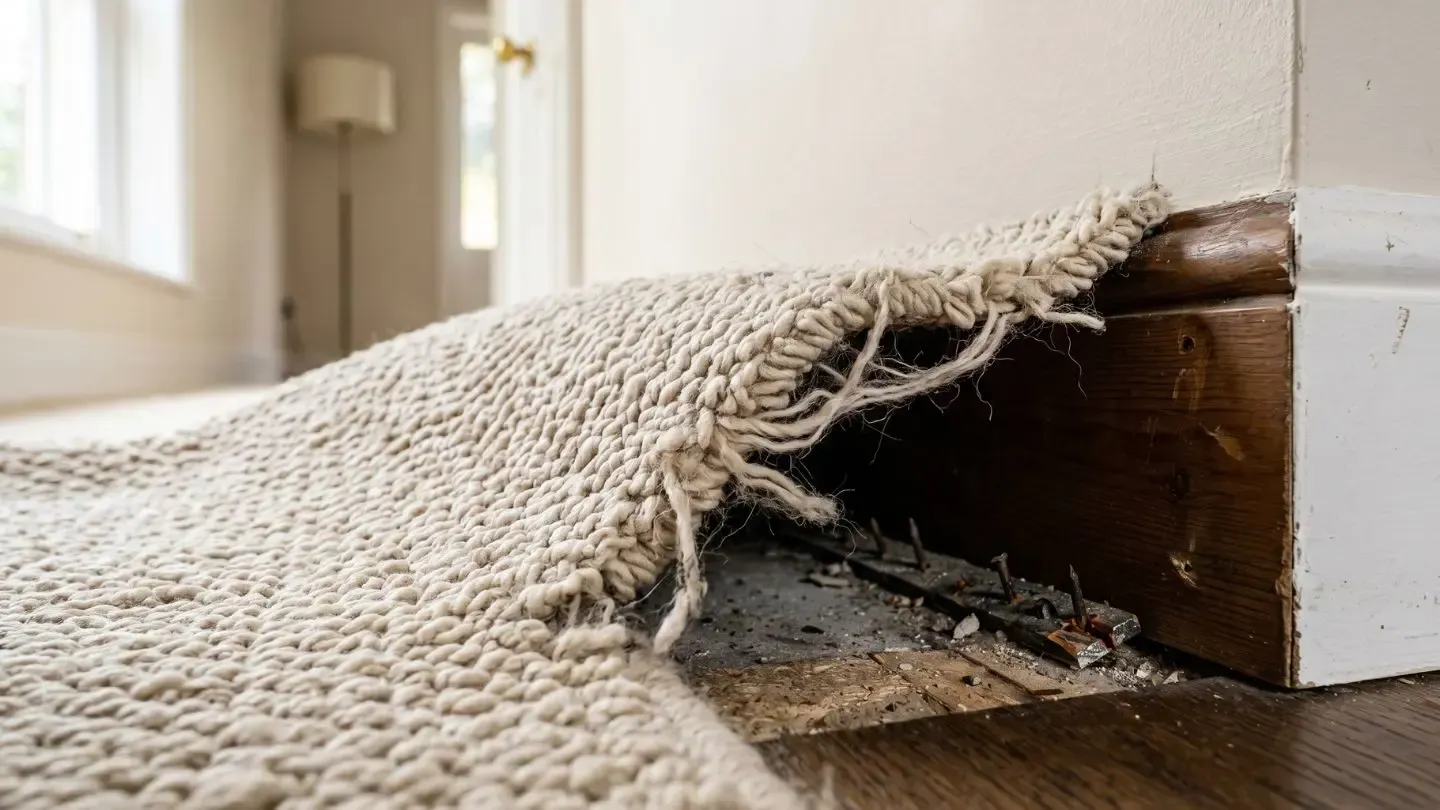
The carpet feels stiff. There’s a distinct, slightly damp, musty odor beginning to creep through the hallway. Worst of all, as you look toward the skirting boards, you notice a gap. Your beautiful, expensive carpet has pulled completely away from the wall, leaving visible floorboards and ragged edges exposed.
You haven't just cleaned your carpet; you’ve shrunk it.
Carpet shrinkage is one of the most heartbreaking, expensive, and common DIY disasters encountered by homeowners. As we head into the true Canterbury winter, the risk of this disaster increases exponentially. Here is a complete guide to the science behind carpet shrinkage, why mid-winter creates the perfect storm for cleaning mishaps, and how a professional truck-mounted system keeps your home completely safe.
The Hidden Structure: Why Do Carpets Shrink?
To understand how a carpet shrinks, you have to look beneath the soft top fibres you walk on. A carpet isn’t just one continuous piece of fabric; it’s a highly engineered multi-layered system.
The top layer (the face pile) is tufted into a primary backing. Below that sits a secondary backing—often made from natural materials like jute, or synthetic alternatives bonded together with a latex adhesive compound.
Shrinkage rarely happens because of the top fibres themselves. Instead, it is almost always caused by the over-wetting of the backing materials.
When natural backing materials like jute absorb excessive amounts of water, the natural cellulose fibres swell in width. As they expand sideways, they structurally contract in length. If the carpet is kept soaking wet for too long, the tension becomes so immense that the carpet backing physically pulls itself inward, snapping away from the smooth-edge gripper strips that keep it pinned to your subfloor. Once a carpet shrinks to this extent, it can rarely be simply "stretched back" into place—it often requires a complete and costly replacement.
The Science of Canterbury Wool: Why Local Carpets are at Risk
Here in Christchurch and the wider Canterbury region, a significant percentage of our homes feature premium, high-quality wool or wool-blend carpets. Wool is incredibly luxurious, highly resilient, and excellent for natural insulation during a freezing winter. However, from a structural standpoint, wool is a highly sensitive natural fibre.
Think of your wool carpet the same way you think of a premium woolen jersey. If you throw that jersey into a standard washing machine with too much water and incorrect heat settings, it comes out fitting a toddler. The exact same structural reaction happens under your feet.
Wool fibres possess an outer layer of microscopic, overlapping scales. When a carpet is subjected to excessive moisture, prolonged wetness, and improper pH levels from harsh, cheap supermarket detergents, these scales expand, lock together, and draw tighter. This process, known as felting shrinkage, pulls the entire backing material inward. Once the backing contracts, it detaches from the walls, leaving permanent, unsightly ripples, buckles, and gaps right along your skirting boards.
The Mid-Winter Trap: Why DIY and Supermarket Rentals Fail in the Cold
During spring and summer, a subpar carpet clean can sometimes go unnoticed because warm ambient temperatures, open windows, and dry air help the floor dry quickly. But once we hit June and July in Christchurch, the game completely changes.
The outdoor humidity skyrockets, the air becomes crisp and dense, and we naturally close up our windows and turn on the heat pumps. This creates an incredibly challenging indoor drying environment. If you opt for a DIY supermarket rental machine or hire a cheap operator using weak portable equipment, you are walking directly into the mid-winter moisture trap.
These retail rental units rely on small, electric motors that simply lack the mechanical vacuum lift required to extract water deeply. They dump gallons of soapy water into your carpet pile and underlay, leaving behind up to 40% of the moisture. In a cold Canterbury home, a carpet cleaned this way can remain waterlogged for 24 to 48 hours. This prolonged exposure doesn't just trigger catastrophic fibre shrinkage; it turns your expensive investment into a breeding ground for musty odours, mildew, and structural floor rot.
Beyond Shrinkage: Musty Odours and the Dreaded "Wicking"
When a carpet stays wet for days during a winter DIY attempt, shrinkage isn't your only enemy. Excess water seeps entirely through the backing and pools deep inside the underlay pad.
As the trapped water slowly evaporates upward over 48 hours, it brings underlying dirt, old spill residues, and brown cellulose degradation products from the damp jute backing right up to the surface. This phenomenon is called wicking. You will notice that a day after the carpet finally dries, mysterious brown circles and old stains reappear out of nowhere, looking worse than they did before you started.
Worse still, damp padding trapped under a carpet without airflow cannot breathe. Within 24 to 48 hours, mold spores begin to activate, locking a stale, sour "damp-dog" smell into your home that is incredibly difficult to eliminate once it takes root.
The 38Hp Solution: How Dave Guarantees a Zero-Shrinkage Winter Clean
Avoiding carpet shrinkage while achieving an immaculate, deep-sanitized clean comes down to a simple engineering equation: Massive Airflow + Managed Moisture Control.
At Christchurch Carpet Cleaning, we don't bring weak, portable plastic tubs into your home. Our system is completely truck-mounted, powered by a heavy-duty, 38-horsepower (999cc) industrial engine built directly into our service vehicle.
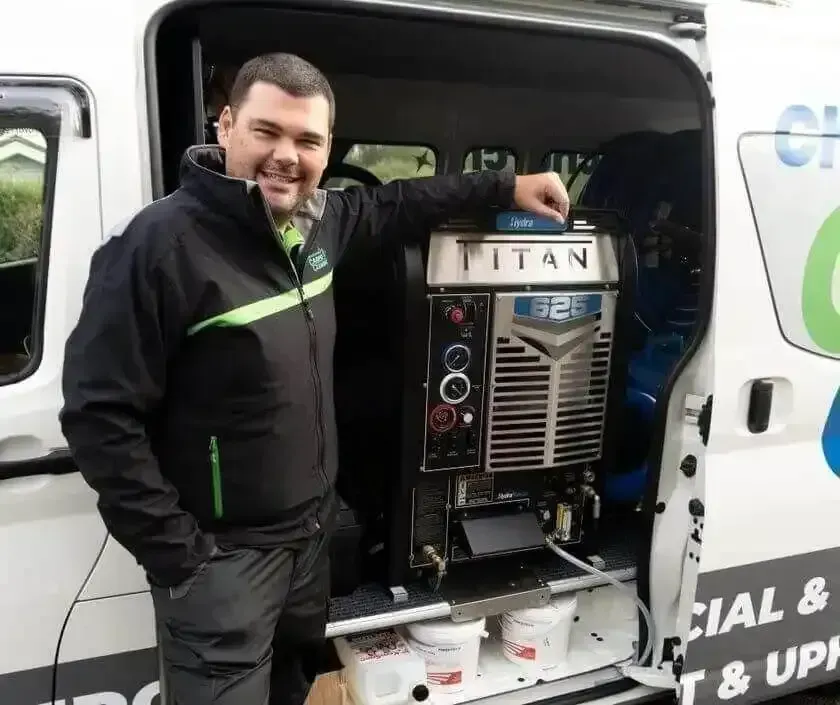
This immense power allows us to execute a strict winter safety protocol that guarantees your floors remain perfectly intact:
Precision Temperature Management: Our machine heats water to exact, controlled steam temperatures. This allows us to sanitize your carpet and break down deep-seated oils cleanly, without ever shocking or destabilizing delicate wool bonds.
Industrial Extraction Force: Our truck-mounted vacuum blowers exert an incredible amount of suction power. We instantly pull 95% of the water right back out of the carpet pile and underlay, transferring the dirty water directly to a recovery tank inside our truck.
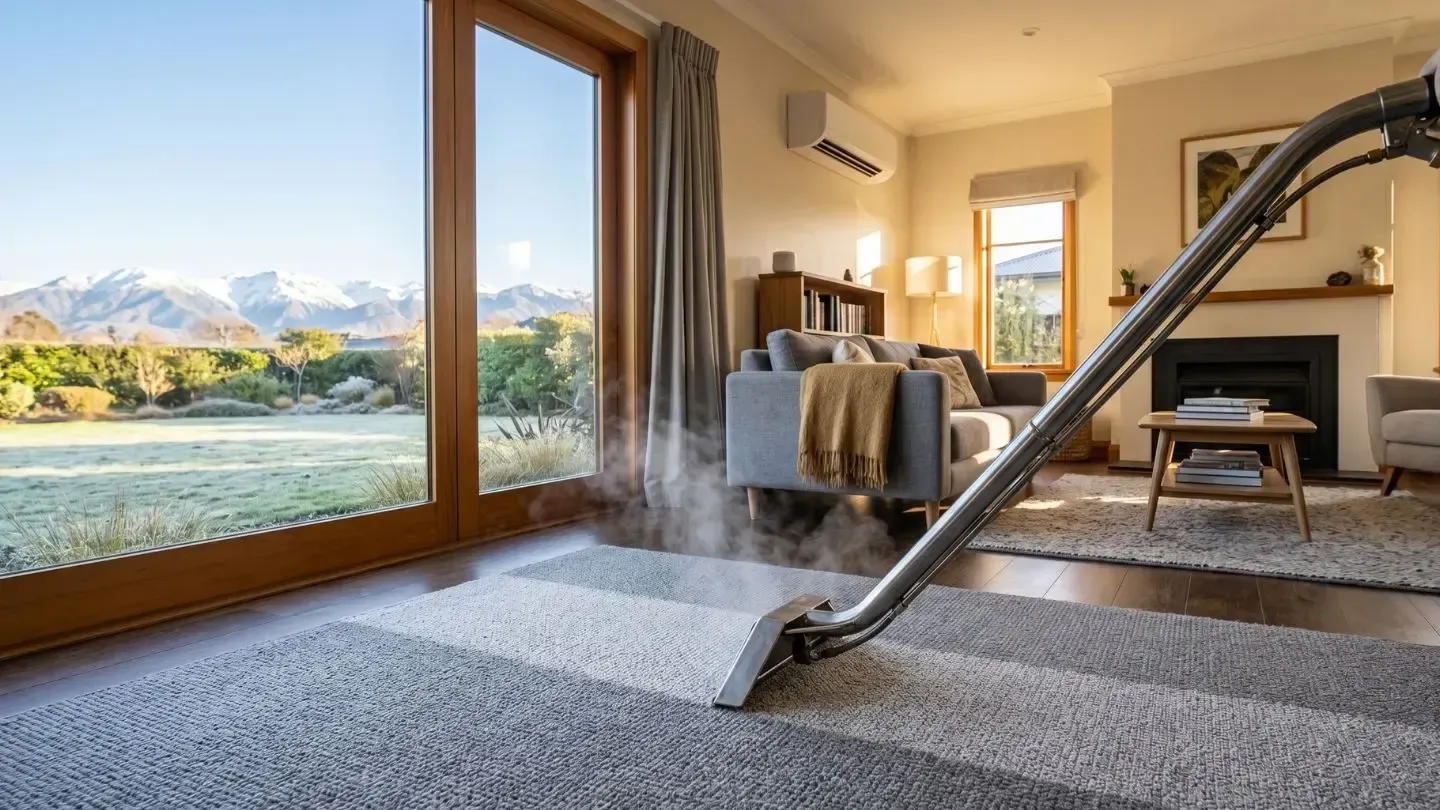
The 3–5 Hour Dry Window: Because our extraction process is so thorough, your carpets are left only slightly damp, never soaking wet. Even on a freezing winter day, your floors will be completely dry, warm, and perfectly fresh within a matter of hours—well before your evening family movie starts.
Protect Your Investment This Winter
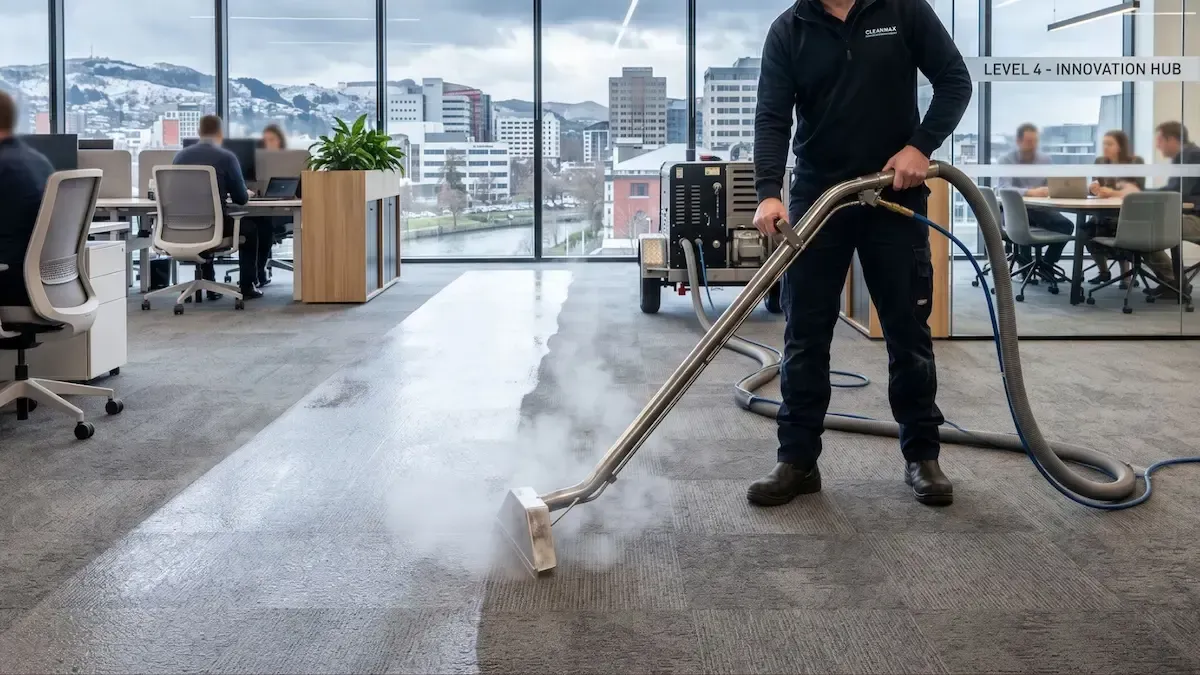
Your carpets are one of the most expensive features of your home. Just like maintaining a premium vehicle, your flooring requires specialized, industrial-grade servicing to protect its longevity and value. This rule applies equally to your workplace environment; maintaining clean, dry conditions via specialized commercial carpet cleaning in Christchurch prevents fiber breakdown and keeps your office tracking perfectly through the damp winter months.
Don't risk a permanent home DIY disaster to save a few dollars on a rental machine. Whether you are living in a character villa in the CBD, a modern family home in Rolleston, a lifestyle block in Rangiora, or right down the road from our base in Kaiapoi, we are here to help you secure a clean, safe, and completely cozy winter sanctuary.
Get your home deep-cleaned, fully sanitized, and entirely safe from shrinkage this winter by leaving the heavy lifting to a certified local professional.
📞 Worried about your wool floors or winter dry times? Get a safe, guaranteed winter clean from Dave. Click Here to Request an Obligation-Free Local Quote